Thursday, June 18, 2009

Squarepusher - Feed Me Weird Things (1996) (mp3, 128kbps)


I'm riding a strong wave of Squarepusher love right now, AND he just announced what the next project will be. So the second 'Artist of the Week' in my irregular series (started with Wayne Shorter), is Tom Jenkinson, a/k/a Squarepusher.

What better place to begin than with the very first record? Normally, I have no wish to deprive the artist of record sales, but this essential title does not really seem to be for sale. Not on iTunes and not on Amazon, other than for $80+ used. So, forget that.

This was not the first Squarepusher record I got my hands on. That was, of course, 'Hard Normal Daddy'. I always say the same thing about that record: If you don't have it, stop what you are doing and go get it. Stop reading this blog. Stop playing with your computer or phone. Go get the record. You will NOT be sorry. There are certain defining records in any genre, records that achieve the nexus of (a) unique creativity, (b) broad appeal in their time, and (c) lasting impact on other music. Hard Normal Daddy hits all three. It took the traditional idea of jazz and jazz fusion instrumentals from the 60's and 70's and connected it to rave and dance music in almost the exact same way rap and hip-hop connected to funk and r'n'b from the same era.

Feed Me Wierd Things retains fewer of the traditional elements. Yes, this is a 'long player', a full length record, as opposed to being a vinyl 12-inch stuffed into an anonymous white sleeve - DJ style. What this record firmly establishes is the painstaking and meticulous approach to rhythm and percussion that was not previously present in electronic music.

'His beats are made,' said Bono. And this record is where that begins. In earlier electronic music, the driving drum beats were loops which freed up the DJ/producer/musician/rapper to layer on his or her own, without the need of a live drum set. Also, the mechanical sound of the drum machine served as an anchor, thudding away in a constant beat - louder, really, than any other part of the music.

Squarepusher comes along and thinks, 'Those beats can be just as loud and driving, but they don't have to be the same over and over again." That fits with what a jazz drummer does with a rhythm; play around it and let it swing and it can keep the beat without repeating. The downside is getting a machine to recreate the nuance of human spontenaity would take someone who was willing to put in untold hours, secluding himself from the world in order to create process his music until it is just so; going drum stroke by drum stroke with everything programmed and perfect. Tom Jenkinson is the human/ghost in the machine.

Whether you are talking about the near chaotic blerps and schbleps of 'North Circular', or the cool, almost classical guitar feel of 'Squarepusher Theme', or the unrelenting killer melody that frames a drum frenzy on 'Theme From Ernest Borgnine' - those beats are mad. The following record may have been the one that broke through, but it is this first outing that introduces the noisy/obnoxious/avant garde streak in a man who is, technically and otherwise, a real musical genius.

  1. "Squarepusher Theme" – 6:20
  2. "Tundra" – 7:55
  3. "The Swifty" – 5:20
  4. "Dimotane Co." – 4:54
  5. "Smedley's Melody" – 2:33
  6. "Windscale 2" – 6:35
  7. "North Circular" – 6:08
  8. "Goodnight Jade" – 2:45
  9. "Theme from Ernest Borgnine" – 7:55
  10. "U.F.O.'s Over Leytonstone" – 6:39
  11. "Kodack" – 7:14
  12. "Future Gibbon" – 2:18
The link is in the comments.

Wednesday, June 17, 2009

The Police - Gateshead Festival (1982) (160kbps)

This wasn't quite the end, not quite time to pass the baton to Bono and the boys, but on this day in 1982, U2 showed they could go toe to toe with the big boys. And the biggest boys back then were The Police. Andy Summers made a decision to go minimal. Stewart Copeland could play anything, but was lucky and smart not to get stuck in an aging prog or fusion act. And Sting? Well, I think Sting is a huge wanker and now he just sucks. But back then, he had what it took to be a sincere and agile front-man who actually played an instrument. It wasn't Sting and The Police. back then, he was just another guy working his ass off to make his band the biggest thing in the world. By the time Synchronicity came out (the year after this show), that goal had been achieved.

July 31, 1982

CD1: (46:07)
01. Message In A Bottle (4:18)
02. Every Little Thing She Does Is Magic (4:13)
03. Walking On The Moon (5:04)
04. Spirits In The Material World (3:26)
05. Hungry For You (J'aurais Toujours Faim De Toi) (3:13)
06. When The World Is Running Down (3:53)
07. The Bed's Too Big Without You (4:59)
08. De Do Do Do, De Da Da Da (5:57)
09. Demolition Man (5:31)
10. Shadows In The Rain (5:28)

CD2: (42:15)
01. Driven To Tears (3:22)
02. Bring On The Night (5:42)
03. One World (Not Three) (4:16)
04. Invisible Sun (4:29)
05. Roxanne (5:56)
06. Don't Stand So Close To Me (3:28)
07. Can't Stand Losing You / Reggatta de Blanc / Be My Girl, Sally (7:44)
08. So Lonely (7:14)

The link is in the comments

Van Halen - Goldenwest Ballroom (1976) (mp3, 160kbps)


The Golden West Ballroom appears to have little significance outside of the fact that is was the scene of this concert in 1976. It was our Great Nation's two hundredth birthday; punk didn't exist yet; Prog Rock and Jazz Fusion were still riding high, but showing some signs of aging; Miles Davis was in self-imposed exile from music. And this quartet from Los Angeles was getting ready to change everything about how we understand that ephemeral phrase: ROCK AND ROLL!!

I only wish there were a bit more bass in teh recording, but it's still a killer.
  1. On Fire 2:35
  2. Show Your Love 4:37
  3. Last Child 4:27
  4. Tush 3:05
  5. The Rover 6:19
  6. Let's Get Rockin' 3:11
  7. Ice Cream Man 5:12
  8. Last Night 3:52
  9. Eruption 3:09
  10. We Die Young 3:36
  11. Somebody Get Me A Doctor 4:47
  12. Babe Don't Leave Me Alone 4:14
  13. Let Me Swim In Your Ocean 1:40
  14. She's The Woman 3:23

Total Time - 54:07

The link is in the comments.

Sunday, June 07, 2009

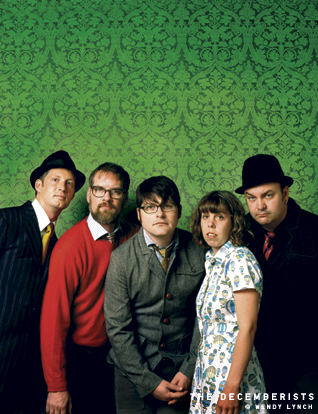
Decemberists - KCRW (2009) (mp3, 256kbps)


They put on quite a show at the Tower Theater in Upper Darby, PA last night. Em and I are still recovering. Feel free to check out my thoughts on the show at mpomy.com or at the brand-spankin' new fretbuzz.net. It's the same post, but there's now an effort to make some collaborative music blogging happen, so I'm double posting everything.

So, as part of the promotion for their new album, The Hazards of Love, the band stopped off at KCRW and played some of the highlights from the record. This is no substitute for seeing the action go down live and in person, but it at least provide a glimpse of the tasty output presently coming forth forth from this highly ereudite indie rock outfit.

KCRW Radio FM Broadcast
Santa Monica, California.
Source: FM Broadcast

Live In Studio Session @ Time Of Broadcast

AIRED: Friday, May 15, 2009


01.(=Intro=)
02.The Hazards of Love 1
03.Won't Want for Love
04.The Hazards of Love 2
05.(=Interview=)
06.The Wanting Comes in Waves/Repaid
07.The Queen's Rebuke
08.The Rake's Song
09.(=Outro=)


Colin Meloy - Guitar, Vox
Chris Funk - Guitar, Mandolin, Vox
Jenny Conlee - Piano, Organ
Nate Query - Bass
John Moen - Drums, Vox
Becky Stark - Vox
Shara Worden - Guitar, Vox


The link is in the comments.

Friday, June 05, 2009

Fish - Tales From The Big Bus (1998) (mp3, 160kbps)


Well, we're going to see The Decemberists tomorrow night, and I really don't know anything about them, so it's been a steep education curve over the past few days. The band is fronted and master-mind-ed Collin Meloy, who in his earnestness and eccentricity reminds me of the Fish. The music is different and, of course, Fish is older and has been sloggin away at this rock singer thing for low these many years. But the showmanship and the just-ever-so-slightly-out-of-kilter charisma - Fish has really got it. We'll see what Mr. Meloy looks like tomorrow night and report over at Mpomy HQ.

But to keep things moving at the music blog, and seeing as this title is pretty much out of circulation, here is a fine example of the 1989 Sunsets on Empire Tour. This was the first tour I saw Fish, though not in Koln. But this is the same band and roughly the same set and its a real corker! Enjoy the extended medleys, broken up by Fish's amazing stories of life on the road, badgers and everything else.

CD1 (64:05)
01. Perception of Johnny Punter (11.41) [Dick/Wilson]
02. What Colour is God? (07.21) [Dick/Wilson]
03. Family Business (06.24) [Dick/Simmonds/Lindes]
04. Mr. 1470 (05.32) [Dick/Paterson/Boult]
05. Jungle Ride (08.15) [Dick/Boult]
06. Medley (20.25):
(i) Assassing [Dick/Rothery/Kelly/Trewavas/Mosley]
(ii) Credo [Dick/Simmonds/Boult/Usher]
(iii) Tongues [Dick/Simmonds/Boult/Usher]
(iv) Fugazi [Dick/Rothery/Kelly/Mosley/Trewavas]
(v) White Feather [Dick/Rothery/Kelly/Trewavas/Mosley]

CD2 (50:17)
07. Cliché (08.35) [Dick/Simmonds/Lindes]
08. Brother 52 (06.08) [Dick/Wilson]
09. Lucky (20.14) [Dick/Simmonds/Boult]
10. Internal Exile [Dick/Simmonds/Boult]
11. The Company (08.48) [Dick/Simmonds]

The link is in the comments.

Thursday, June 04, 2009

B. B. King - Toronto Forum (1978) (mp3, 128kbps)

Time for a little blues. If you know nothing else about the blues, you probably know BB King. He's been around a long time, he's extremely well-spoken and respectful - not like all those other scary blues musicians! We can debate the climate of racism during which this artist reached tremendous success till the cows come home.

Oh yeah, one other thing. He's an absolutely filthy guitar player. And that's the real reason he got to where he got. BB took the basic idea of the single note blues that T-Bone Walker really established, and he just made made it so down and dirty and nasty that you can't resist. Just listen and tell me that you disagree.

A big reason that BB has been able to keep it going so long is that he's also a hell of a showman. Even in this recording, you can hear him working the audience and using that energy to get the band into a higher plane of performance. It's so good you can taste it!

1. Caledonia 4:30
2. Night Life 6:35
3. Walking Dr. Bill 4:55
4. monlogue> 3:44
5. Instrumental 6:23
6. Why I Sing The Blues 5:32
7. Never Make Your Move Too Soon 6:16
8. The Thrill Is Gone 6:06
9. outro 1:30

The link is in the comments.

Monday, June 01, 2009

Steve Hackett - Highly Strung (1983) (mp3, vbr)


I usually try not to post something that can readily be obtained through other means. I'll probably earn myself a cease and desist letter for this one. But it was definitely time for some pure prog after all that Wayne Shorter. Not because they're so different, but because they're (also) so similar. The painstaking compositional aspect of those Wayne records from the 80's depends on every note being in the right place. That's just like lots of prog rock! How Wayne was able to do that in a predominantly improvisational format (i.e. Jazz) is beyond me and a testament to his substantial genius.

But back to Mr. Hackett. I'm not saying this particular prog rock masterpiece embodies all those strange and wonderful qualities. On the contrary, Highly Strung is a bit of a romp. Hackett flexes his substantial guitar muscles on the first three tracks, all of which feature his beautiful, harmonic soloing. He then lays it on even thicker with 'Group Therapy' and the aptly titled 'Hackett to Pieces'.

Two things come to mind with this collection of music, especially after listening to all that Wayne Shorter. The first is that Hackett is producing with a much smaller budget. The overall musical impression of the record is just a little more chintzy. I don't know how else to say it. With Wayne's solo records, I feel like there is a beautiful and shimmering quality to the production. As with the composition, everything is just right, and cost is no object.

The second difference, for me at least, is that this music does not seem to be influenced by the popular music of the day, or by any context. Talk about no compromise! It's something that's always been one of Hackett's most admirable qualities. He simply plays what he hears in his head. No one knows where it comes from. Take, for example, the bonus track 'Guitar Boogie'. Ladies and gentleman, this is not blues. I don't care how much the artist tries to tell you different. Calling that song blues is like calling Keith Richards a classical musician. It's just wrong. But that's how Hackett hears it, and, god knows, he can play the shit out of that guitar, so why not?

  1. "Camino Royale" (Hackett, Magnus) – 5:28
  2. "Cell 151" (Hackett) – 6:26
  3. "Always Somewhere Else" (Hackett) – 4:02
  4. "Walking Through Walls" (Hackett) – 3:48
  5. "Give It Away" (Hackett) – 4:08
  6. "Weightless" (Hackett) – 3:31
  7. "Group Therapy" (Hackett) – 5:47
  8. "India Rubber Man" (Hackett) – 2:31
  9. "Hackett to Pieces" (Hackett, Magnus) – 2:40

2007 Remaster Bonus Tracks
10. "Guitar Boogie" - 2:12 11. "Walking Through Walls (Single Edit)" - 5:55 12. "Time Lapse at Milton Keynes" - 3:52

  • John Acock – keyboards
  • Steve Hackett - guitars, vocals
  • Chris Lawrence – contrabass
  • Nick Magnus - keyboards, devices
  • Ian Mosley – drums
  • Nigel Warren-Green – cello
The link is in the comments.

Thursday, May 28, 2009

Miles Davis - Dark Magus (1974) (mp3, 160kbps)


Tatu is for me the best recording of the Pete Cosey era. Miles has gone through all his keyboardists. Herbie Hancock, Chic Corea, Kieth Jarrett, Joe Zawinul. He tries little known Cedric Lawsin and then it's no keyboard player. From 1972 to his 1975 exile from music that lasted 6 years, the keboard player in the Miles Davis band was Miles Davis. At 48 years of age, the hard living has clearly caught up with him, but its just as clear that he is unble to stop composing, playing and performing. The keyboard gave him a physically less taxing way to be part of the jam.

But when that trumpet comes forth, oh my! Let me set this up for you on Tatu, the first song on the second disc. No keyboard player, but three guitarists and two saxophones, and drums, and percussion. Nine people on stage at Carnegie Hall, no setlist, no songs. Miles is doing a lot of conducting throughout the performance, composing even as the thing proceeds.

So, Tatu starts with a fairly safe funk riff that Miles introduces on the organ. It's picked up by the guitar and bass, and we get guitar solos trading with Miles' absolutely wicked organ work. Pete Cosey urges him on with soaring and warped effects of his own. Miles is ready to let this jam simmer until around 8:20, when he breaks it down and we get dueling sax solos. Up until this point, it's pretty standard fare for this era. Strong elements of the music on 'Pangea', 'In Concert: Philharmonic' and 'Agarta' are present here. But when the sax solos begin, the three guitars go to a totally different feel. The comping is slow and the chords have a major feel. Henderson's bass stays in a similar groove with offsets, stops and starts, all orchestrated by the bandleader in real time. Miles might be too hurtin' to play much trumpet, but he's feeling the music tonight.

At about 10:26, Henderson picks up on the minimal feel and starts to just lay down the root note, over and over again. The drone effect gives beautiful emphasis to the saxes and guitars. After more than thirteen minutes, we still haven't heard the trumpet once.

Things begin to really devolve around the end of the sax solos. Miles signals change with the keyboard, but it doesn't take. The soloist is having a hard time letting go. But at 15:09, he's rescued by the rhythm guitar of Reggie Lucas. And now it sounds like the Rolling Stones, switching out of that soft major mode and playing some blues! The bass threatens to switch back to what we started with sixteen minutes ago. But oh, what's that? Miles has his horn.

Now this band has to deliver. They have to make way and roll out the red carpet with a groove so tasty, because they probably don't know when this opportunity will come again. He comes into the ring somewhat tentative, but making his intentions clear. Then he's conducting again and getting ready to take flight. The wah-wah pedal and the echo can't hide the obvious pain and difficulty he's having - they just make it louder. This is evil live.

At 18:51 it's time to run back to the safety of the keyboard. It appears that the song is over, but, even if the trumpet solo took a lot out of him (also - you always leave them wanting more!), he's still in the music. So now its back and forth with the rel heavy stuff, led by Miles' atonal assaults on the organ. But in a moment he'll stop with a completely innocuous little riff, something you would hear Zawinul play. In the spirit of a World-Music vibe, we get a finger piano solo. It sounds almost like a toy, and yet it usher's in the big finish.

Miles is in charge all the way. There are no more stops. No more conducting. Now it's time to really see what this band can do. Set up the groove and write the song while you play it. The organ does not play any set progression, it just plays the song, like it was always that way. Starting at 21:35, you have some of the best Miles Davis music ever recorded, and probably some of the most unknown. When that horn comes back for the last time, he doesn't sound pained, he sounds like a prize fighter bouncing around the ring and pumping his fists before the fight. And his band rejoices.

This is hard music, to be sure. And there are no flashy sidemen. That six years without making music had to have been a dark time for Miles. Taking him away from music is like taking music away from music. How could either exist? But through this music, you get to experience the horror of that slide as its happening, while never leaving the relative safety of your own home.

March 30, 1974
Carnegie Hall, New York City

Moja 25:23
Wili 25:02
Tatu 25:21
Nne 25:30

  • Pete Cosey – guitar
  • Miles Davis – organ, trumpet
  • Al Foster – drums
  • Dominique Gaumont – guitar
  • Michael Henderson – bass
  • Azar Lawrence – tenor saxophone
  • Dave Liebman – flute, soprano saxophone, tenor saxophone
  • Reggie Lucas – guitar
  • Teo Macero – producer
  • James Mtume – percussion
The link is in the comments

Tuesday, May 26, 2009

Wayne Shorter - High Life (1995) (mp3, 160kbps)


UPDATE: As a little post script to Wayne Shorter week, here's a re-post of the one that got me thinking that, hey, this guy is a bona fide genius!

Uncompromising. Every single note has to be in the exact right place. This is painstaking composition, all for the greater good of the song. The result is a set of compositions that seem to float in the air, darting and dodging with the delicacy of a butterfly. But Wayne doesn't sting like a bee, not here at least. Instead, his moments of improvisation come forth with such power that they soar above the beatiful cloud that is creared by all those notes.

This is a beautiful recording, but suffers a bit from Marcus Miller's production. These compositions would hold up perfectly well in an acoustic format, but the production makes it a bit glossier than it needs to be. So please, wade through that and be patient. Wayne is always worth it!

1. Children Of The Night 7:24
2. At The Fair 7:30
3. Maya 5:12
4. On The Milky Way Express 5:35
5. Pandora Awakened 6:19
6. Virgo Rising 6:46
7. High Life 6:28
8. Midnight In Carlotta's Hair 5:54
9. Black Swan (In Memory Of Susan Portlynn Romeo) 5:54

Wayne Shorter
Rachel Z: Piano, Synthesizer
David Gilmore: Guitar
Lenny Castro: Percussion
Airto Moreira: Percussion
Munyungo Jackson: Percussion
Kevin Ricard: Percussion
Will Calhoun: Drums
Terri Lyne Carrington: Drums
Marcus Miller: Producer

The link is in the comments.

Friday, May 22, 2009

Wayne Shorter - Joy Rider (1988) (aac, 256kbps)

We're coming down the homestretch for these crazy albums. This one, again, not well loved by the critics, is perhaps the most powerful of the era. 'Over Shadow Hill Way' and the title track both made it onto the acclaimed Beyond The Sound Barrier, and everybody loves that album (including me)! Is it possible that people heard that so-called contemporary jazz production and just gave up on these records? I think it's more than possible. It is the same formula he'd used on the last two, and I find the results to be similarly stunning. After spending a lifetime in the improv business, Wayne embraced the technology (just like his old partner Zawinul did) but then went off into the inner space of painstaking composition. 'Cathay' and 'Causeways' are the two unsung heroes of this record. They show that atmosphere and composition can go together - if you know your music! In an era when all music was getting more and more stripped down, Wayne took his time and made something that was not necessarily 'of the moment'. Peerhaps that's why, when I listen to this strange and beautiful music now, I find it to be absolutely timeless.

  1. Joy Ryder
  2. Cathay
  3. Over Shadown Hill Way
  4. Anathem
  5. Causeways
  6. Daredevil
  7. Someplace Called "Where"
All Compositions by Wayne Shorter
  • Recorded in Los Angeles, CA, 1988

Personnel:
The link is in the comments.

Wednesday, May 20, 2009

Wayne Shorter - Phantom Navigator (1986) (mp3, 160kbps)


1986. Genesis have hits galore with 'Invisible Touch'. Peter Gabriel hits one out of the park with 'So'. Dire Straits are touring every corner of the globe in support of 'Brothers In Arms'. All of these albums were HUGE commercial successes by established artists, but none of them are sell-outs (If you disagree with that description, feel free to comment or get your own blog!). And these records have withstood the test of time. Twenty-three years later, I have a moment of thinking that old saying "the masses are asses" might be wrong.

And then I hear a record like 'Phantom Navigator'. The Wikipedia entry has nothing more than track listing and personnel. Allmusic features the following sentence in the review:
Nothing wrong with electronics per se; it's just that Wayne's compositions in that idiom are weak, the endlessly undulating melodic lines go nowhere and have nothing fresh to say.
There are no fewer than fourteen musicians scattered throughout the recording, and it seems like half of them are playing synthesizers. But something has happened. It started with Atlantis and its continuing here. The layering of melody over melody and the ever-changing flow of each song - it's all so carefully composed. People lamented the end of Wayne's career as an improvisational artist. But instead of stretching out his solos, the improv comes out in fits and bursts. And against the backdrop of such painstaking composition, the solos come charging out with such beautiful force. This is especially true on the experimental 'Yamanja', featuring Wayne on a furious lyricon solo. The overarching feeling is that every note must be in its right place and the song would not work unles each and every note were placed and played just so.

The other thing I would advise all the haters is that he's playing these songs now with his vaunted quartet. 'Forbidden Plan-It' and 'Flagships' are part of the current band's repertoire, in addition to other songs from this much maligned period of output. So, let's not hear about how he can't compose in a certain 'idiom' Whether it's with the Imani Winds at Carnegie Hall, an orchestra at the Concertgebouw in Amsterdam, or with a rotating cast of fusion all-stars, as on this record. These songs are exceptional.

Here's the info:
  1. "Condition Red" - 5:08
  2. "Mahogany Bird" - 6:10
  3. "Remote Control" - 7:55
  4. "Yamanja" - 6:28
  5. "Forbidden, Plan-It!" - 6:09
  6. "Flagships" - 6:35
All Compositions by Wayne Shorter
  • Recorded in Los Angeles, CA, 1986
Personnel:
The link is in the comments.

Tuesday, May 19, 2009

Wayne Shorter - Atlantis (1985) (aac, 256kbps)

Starting in the mid-60's, Wayne Shorter became a prolific solo artist. He had won a lot of recognition and success as the sax-man and musical director for the beloved Art Blakey & The Jazz Messengers. I have always thought that Shorter's stint with Blakey (how about 18 recordings in five years!?!) was exactly the place to start if you wanted to introduce a music fan to the broad concept of jazz. Thanks in large part to Shorter's vast technical ability and passionate performances, this music (to my ears, anyway) is jazz. It's all here - bop, and big band, to fusion and rock 'n' roll. I can hear the whole gamut in those Messengers records. Get 'Ugetsu' and tell me if you think I'm wrong.

So Wayne's becoming a big star. It's 1964 and he starts recording all kinds of solo records with big-name side men. He is also asked to join the second great Miles Davis Quintet - taking over the assignment previously held by John Coltrane.

In 1967, two things happen that change the landscape of jazz and, indeed all music. Coltrane dies at the age of 40 and Miles Davis introduces an electric piano into his combo. Immediately, everyone looks to Shorter to become the new Coltrane. The pressure must have been unbelievable. And all of this is against the background of the Summer of Love, the war in Viet Nam, Jimi Hendrix and political and cultural upheaval. Miles goes supersonic with Bitches Brew and Shorter's solo albums become very improvised and edgy.

But there's something missing. When I listen to these records (Schizophrenia, Super Nova and Moto Grosso Feio), I hear a passionate search, but it doesn't quite come together. Even the album titles tell you that something strange is going on with this artist! I think it very likely that one day I will feel differently, but, to a certain extent, the proof is in the pudding. Unlike Chick Corea, Keith Jarrett, John McLaughlin, Tony Williams, Herbie Hancock and so many others, Shorter did not go right out and set the world on fire with his post-Miles solo career.

Instead, he partnered up with Zawinul for Weather Report and spent the next fifteen years in one of the greatest bands of all time. The story of Weather Report should be told another day, but for now, suffice to say, this collaboration was a high-water mark for all parties involved. Creative freedom and commercial success.

Which brings us to the solo records from after Weather Report, the first of which is posted here. This is roughly classified as 'contemporary jazz', whatever that is, but the more important aspect is the new voice that is emerging. While the production may sound a bit dated, the level of complexity in the composition and arrangement is insane. the improvs are carved out of a sonic landscape that gets more and more detailed with every listen. this music is rich and dense. It keeps changing, and, for a kid raised on rock 'n' roll, it was very difficult to get my head around. This is not easy listening. It's harder than opera.

But it marks a new beginning for one of the greatest and most under-appreciated artists in the history of American music. These strange solo albums - complete with their guitars, synths and drum machines - provide the compositions for so much of what Shorter does now. At 75 years of age, he is leading his acoustic (sax, piano, drums bass), 'post-bop' quartet around the planet, exploring (always exploring) new sounds and directions. Even now, as ever, he is at the top of his game. This record marks a beginning, of sorts, where a great part of that climb began.

  1. Endangered Species" - 4:47
  2. "The Three Marias" - 5:48
  3. "The Last Silk Hat" - 5:25
  4. "When You Dream" - 4:28
  5. "Who Goes There!" - 5:29
  6. "Atlantis" - 4:34
  7. "Shere Khan, the Tiger" - 2:15
  8. "Criancas" - 3:40
  9. "On the Eve of Departure" - 5:55
The link is in the comments.

Brian Eno - Here Come The Warm Jets (1973) (aac, 128kbps)


Whenever a new U2 record comes out, I can't help but think of Brian Eno. Oh sure, he's influenced an entire universe of musicians beyond the boys from Dublin, but when I hear their music created since The Unforgettable Fire, I hear Eno. Sometimes that is because he is present for the recordings, but more it is his love of simplicity. Even when he is not sprinkling his influence, Eno's perfectly simple and achingly beautiful chord progressions are still there.

This record is where it really begins. Eno has been active in Roxy Music, but he hasn't had a chance to run the show yet. Keep in mind, the traditional idea of being a 'musician' didn't apply to Eno. He doesn't have natural ability as a vocalist. His technical skills are limited on the seemingly endless number of musical instruments he has access to. And this is 1973! Punk is not really in sight just yet. But there's Eno, making it cool to kind of bang on the instruments. More importantly, he's making it more accessible.

Even though prog and fusion are really just becoming a dominant force in popular music, Eno is moving on to the next thing - not so much because he's a visionary (although he clearly is), but rather because he couldn't really play with those guys. The genius of Eno's early carrier was his ability (out of necessity) to take a player of extraordinary technical skill like Fripp out of his comfort zone. The result will often be something unexpected.

Eno always knew that you can say more with less. But he doesn't sacrifice drama and melody. You can hear on monster hits like 'With Or Without You' and 'Bad'. And for the first time, you could hear it here.

1. "Needles in the Camel's Eye" (Eno, Phil Manzanera) 3:11
2. "The Paw Paw Negro Blowtorch" 3:04
3. "Baby's on Fire" 5:19
4. "Cindy Tells Me" (Eno, Manzanera) 3:25
5. "Driving Me Backwards" 5:12
6. "On Some Faraway Beach" (Eno, Manzanera) 4:36
7. "Blank Frank" (Eno, Robert Fripp) 3:37
8. "Dead Finks Don't Talk" (arr. Paul Thompson, Busta Jones, Nick Judd, Eno) 4:19
9. "Some of Them Are Old" 5:11
10. "Here Come the Warm Jets" 4:04

The link is in the comments.

Update: Thanks to Anonymous for pointing out a dead link. This should work now.

Friday, May 15, 2009

Genesis - Complete BBC Sessions (1970-1972) (mp3, 256kbps)


What can I say? I'm nothing, if not predictable. The funny thing is that this music is so fundamental and influential to prog, that many folks are tired of it and have been so since the mid-80s. I though it was just Marillion, but countless other bands were being lumped into that 'just like Genesis' category. God knows what those critics would say now.

But I wasn't listening to Marillion in the 80's. I was listening to the blues and Bob Dylan and Neil Young. The progiest things I had heard were 'Nights in White Satin' and 'Lucky Man'. But I didn't know that was prog or what prog was or even that those songs should be considered in the same category with these songs. I had no context, so I just listened to what was there.

Remember, this is early. This is before the flower mask of 'Supper's Ready' or the leather jacket of 'The Lamb Lies Down on Broadway'. The men performing this music were 20-22 years old. What were you doing when you were that age?

1.01 Shepherd (Nightride, 22 February 1970)
1.02 Pacidy (Nightride, 22 February 1970)
1.03 Let Us Now Make Love (Nightride, 22 February 1970)
1.04 Stagnation (Nightride, 22 February 1970)
1.05 Looking For Someone (Nightride, 22 February 1970)
1.06 The Musical Box (Sounds Of The Seventies, 10 May 1971)
1.07 Stagnation (Sounds Of The Seventies, 10 May 1971)
1.08 The Return Of The Giant Hogweed (Sounds Of The Seventies, 09 January 1972)
1.09 Harold The Barrel (Sounds Of The Seventies, 09 January 1972)
1.10 The Fountain Of Salmacis (Sounds Of The Seventies, 09 January 1972)
1.11 Harlequin (Sounds Of The Seventies, 09 January 1972)
1.12 Harold The Barrel (Mix #2) (Sounds Of The Seventies, 09 January 1972)
2.01 The Fountain Of Salmacis (In Concert, 02 March 1972)
2.02 The Musical Box (In Concert, 02 March 1972)
2.03 The Return Of The Giant Hogweed (In Concert, 02 March 1972)
2.04 Twilight Alehouse (Top Gear, 25 September 1972)
2.05 Watcher Of The Skies (Top Gear, 25 September 1972)
2.06 Get'em Out By Friday (Top Gear, 25 September 1972)

The link is in the comments

Monday, May 11, 2009

Bob Dylan - Satisfied Man (1976) (mp3, 128kbps)


Time for a little Bob. His new record is great, so you should just go out and get that right now. Indeed, he seems a bit more 'satisfied' now than he was 33 tears ago when this concert was performed. Some people love the 'Rolling Thunder Review' and some people, not so much. There's some horrendous Joan Baez sprinkled in here, but that might apeal to some people. Roger McGuinn makes an appearance too.

This tour finds Dylan at the peak of his second great career arc. he had come out of hiding in the early part of the decade, got divorced and recorded his masterpiece 'Blood on the Tracks'. After that came Desire, which is even better. The recording of that record was a serendipitous experience. Dylan was literally pulling people in off the street to record, regardless of experience or musical ability. Somehow it all worked out. The album is stellar.

Which brings us to The Rolling Thunder Review. I think Mr. Dylan was flushed with the success of the record and embarked on an anti-tour. He mixed in some of the old political stuff, surrounded himself with a bunch of old friends (musical and not) and took the whole circus out on the road to play smaller venues with as little notice as possible. The experiment didn't quite work perfectly, as the music is, at times, rough and meandering. The violin never stops, which can get a bit grating, and Dylan insisted on painting his face white for reasons that are still not well-understood.

But with all the craziness, you still have some remarkable music, because that's what tends to happen with Dylan at all stages of his career. Keep in mind that when this faze wrapped up, he became a born again Christian and created some of the best and most controversial music of his career. Live version sof that will be posted in the future.

So, almost as always, we find Dylan in transition. He made his comeback with two phenomenal records and then tried to break some rules with this tour. When that didn't pan out, he set off a bomb with the born-again thing. Ballsy? That's what Bob is all about.

Bob's Boots rates this as an 8-1/2 out of ten, and I thinks that's probably right. It is an old recording and has some typical bootleg anomalies, but it still gives you a glimpse at the kind of tour that will never be repeated by a big-time rock star.

Palace Theater, Waterbury, CT Nov.11, 1975

  1. Hard Rain
  2. Romance In Durango
  3. Isis
  4. Blowin' In The Wind
  5. Water Is Wide
  6. I Dreamed I Saw St. Augustine
  7. Never Let Me Go (J.C. Scott)
  8. I Shall Be Released
  9. Simple Twist Of Fate
  10. Oh Sister
  11. Hurricane
  12. One More Cup Of Coffee
  13. Sara
  14. Just Like A Woman
  15. Knockin' On Heaven's Door
  16. This Land Is Your Land (W.Guthrie)
The link is in the comments.

Thursday, May 07, 2009

Herbie Mann - Push Push (1971) (mp3, 320kbps)


Outstanding groove. Awsome chops. Killer chest hair. A different kind of fusion - Jazz flute meets Duane Allman in Memphis. Lots of ingredients, but it all comes out just right. Mann had a special knack for putting the right people in the right places to suit the musical vision. His idea of mixing a Stax-style Memphis groove with the improv of jazz... well, it just worked. This is the best example, but there are plenty of others that you should check out from this same era. Other guests on this release include Al Jackson, Jr. and Donald Duck Dunn - both from Booker T. and the M.G.s.

  1. Push Push
  2. What's Going On
  3. Spirit In The Dark
  4. Man's Hope
  5. If
  6. Never Can Say Goodbye
  7. What'd I Say
  8. Funky Nassau (CD Bonus Track)
The link is in the comments.

Monday, May 04, 2009

Pink Floyd - Meddler (1971) (m4a, 128 kbps)


Bootlegs like this are the reason I love music. Pink was like my security blanket when I was younger. If I were Linus from the Peanuts, Floyd was my blue luvvy. This performance has been put out is so many different incarnations that I'm not sure what version this one is. All I know is that the sound is outstanding (esp. for the age of the performance), and the performance is that of a band that is getting ready to change he world in just a few moments.

  1. Fat Old Sun 15:35
  2. One Of These Days 6:57
  3. Echoes 26:23
  4. Embryo 10:32
  5. Blues 5:24
The John Peel Show, BBC Radio
Recorded live at the Paris Cinema, London September 30, 1971

Waters, Wright, Mason, Gilmour

The link is in the comments.

Sunday, April 26, 2009

Trilok Gurtu - North Sea Jazz Fest (2002) (mp3, 128kbps)


This stuff is so good, I don't even know what to say. You can read my comments on Trilok as I believe his work relates to Weather Report and Zawinul here, and there's another download here. This recording seems to be radio quality. I've tried to up the levels so that it's listenable in context of other recordings. Check out the furious drum solo at the end of Peace of the Five Elements. This isn't 'world music' or 'jazz' or 'rock' or 'fusion' - its all of that, but so much more. This is music transcended with the enduring energy and eternal spirit of love.

North Sea Jazz Festival - Netherlands
July 13, 2002
  1. Jhulelal
  2. Peace of the Five Elements
  3. Africa Con India
  4. Pasanana's Love
  5. Dance With My Lover
  6. intriduction
  7. God Rhythm
The link is in the comments

Friday, April 17, 2009

Weather Report - Solarizations (1973) (aac, 128kbps)


The jam is simply tremendous. When I have some time, I will have to ruminate on how great this band was. Here are some brief thoughts.

Weather Report is, perhaps most famous for their output from the late 70's. At that time, Shorter and Zawinul had established a successful touring and recording method that mixed beautiful melody with other-worldly improvisation, almost always founded in the grooves that these two men help creat on 'In A Silent Way' where they first worked together. In the late 70's, Jaco Pastorius became a superstar sideman and Weather Report had a big hit with Zawinul's 'Birdland'. This is before all that; before Jaco and before radio-friendy hits which, inadvertantly, gave way to smooth jazz and easy listening, without ever having the quality of either.

When I finally discovered earlier Weather Report, two things struck me right away. I have never forgotten these two aspect of the music. they relate as much to me as they do to the band's aspirations and accomplishments. They are (1) that this was one fo svseral 'first' generation fusion bands that spun off directly from Miles Davis' In A Silent Way and Bitches Brew (Others included 'Return to Forever', 'Mahavishnu Orchestra', and 'Headhunters'), and (2) there was no guitar, not even rhythm guitar. Armed with these two thoughts, I began to delve into the pre-Jaco era.

This is a bootleg that I puchased (!?!) before such things were widely available. The sound quality is superior, as this was undoubtedly a radio show at some point. I have given you the song list as it appears on the CD package. These titles are not correct, but there is so much improvisation, that I understand how the mistakes were made. I think the first song is mostly 'Nubian Sundance', second is 'Freezing Fire', I think, third is a drum solo with some melody from 'Scarlet Woman', and last is 'Boogie Woogie Waltz.' I have also seen some comments that suggest the date and venue are incorrectly marked also. While this is certainly possible, it does not matter. The jam is so hot, you won't really care what the songs are called. Despite the other labelling issues, the lineup appears to be accurate. Here's the info from the CD:

Weather Report
Philadelphia, PA 12/8/74

01. Mysterious Traveller [sic.] 13:07
02. American Tango [sic.] 13:00
03. Nubian Sundance [sic.] 11:57
04. Black Thorn Rose [sic.] 16:34

Joe Zawinul : keyboards
Wayne Shorter : saxophones
Alphonso Johnson : bass
Chester Thompson : drums
Dom Um Romao : percussion

The link is in the comments.

Wednesday, April 15, 2009

Genesis - As Good As Gold (1980) (mp3, 128kbps)


While it may be more of a Wind & Wuthering-type day (cold and rainy), I'm still upset about the loss of Harry Kalas. My first thought was to post a little blues, but then I though about listening to Genesis - Duke when I was eight years old. I had not formed any kind of sophisticated musical pallette at that time, but I knew I liked this album. That was a good thing, becuase my Dad (apparently not knowing this was big-time prog) played this record over and over at high volume. I especially remember loving 'Heathaze' and 'Duchess', the latter of which is included on this glorious bootleg. Like the voice of Harry Kalas calling the Phillies, the sound of that record was a great comfort to me from long ago.

This is the London Lyceum, May 7, 1980. Genesis were busy finding out that they could conquer the world, play prog and make a gazillion dollars with hits like 'Turn It On Again' and 'Misunderstanding.' These were happy times. Everyone was contributing as much as they wanted. Collins was more and more comfortable as the front man and Tony was not yet threatened by Collins' success. All three members were getting their solo careers going and they clearly sensed that the skt was the limit. Given what happened over the next 6 years, they undoubtedly underestimated their commercial potential.

This show was prepeed for the radio, and I'm sure some portion of it went out over the air, but this is the WHOLE show in pre-FM format. That means no ads, no DJ's, no interruptions, just pure music. It's a great set, but mainly because ther album they were touring was so good. they were getting away from some of the more cumbersome prog-o-sourus tunes from the early cretaceous (70's), but there are still a few teases from the Gabriel days.

Deep In the Motherlode 6:17
Dancing With The Moonlit Knight (intro) 1:49
Carpet Crawlers 5:38
Squonk 7:37
One For the Vine 15:06
Behind The Lines 5:22
Duchess 6:48
Guide Vocal 1:39
Turn It On Again 4:43
Duke's Travels 7:15
Duke's End 4:32
Say It's Alright Joe 7:52
The Lady Lies 9:21
Ripples 13:06
In The Cage / Slipperman 8:36
Afterglow 4:40
Follow You, Follow Me 4:42
Dance On A Volcano 4:41
Drum Duet 0:51
Los Endos 7:22
I Know What I Like 10:16
The Knife 3:59

Banks, Rutherford, Collins, Thompson & Steurmer

The link is in the comments.